English
 Deutsch
 Français
 Italiano
 Español
 Svenska
 Polski

Start a Thai Massage Studio in the UK | Professional Guide
How to open a Thai massage studio: a practical guide
Are you planning to open a Thai massage studio and looking for a sound guide to starting your Thai massage business in Europe? Demand for professional Thai massage keeps growing – but long-term success requires solid planning, legal diligence, quality equipment and business know-how. This guide brings together our experience from more than 10 years and over 10,000 studios supplied across Europe.
Your roadmap in 7 steps
From idea to opening day usually takes several months. This order has proven itself in practice:
Why open a Thai massage studio?
Thai massage has long moved beyond a passing trend. Clients across Europe value holistic relaxation, traditional Asian techniques and personal attention. A well-run Thai massage studio offers steady demand, loyal regular clients and a solid economic foundation – provided that quality, integrity and professionalism come first.
The right location
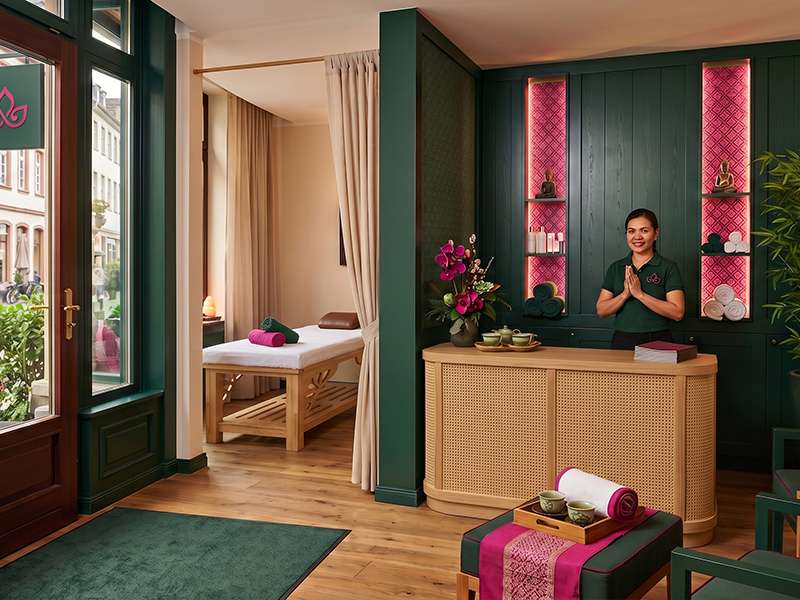
Your location has a major impact on your success. When choosing premises, look for:
- good access by public transport
- a quiet environment without disruptive street noise
- passing trade or proximity to residential and office areas
- sufficient parking for clients
- the competition within a 5–10 km radius
- Permitted use: before signing a lease, check with the local building or planning authority whether the premises may be used commercially for wellness and massage services.
Small studios with just two or three rooms can be very successful – when equipment, ambiance and service are right.
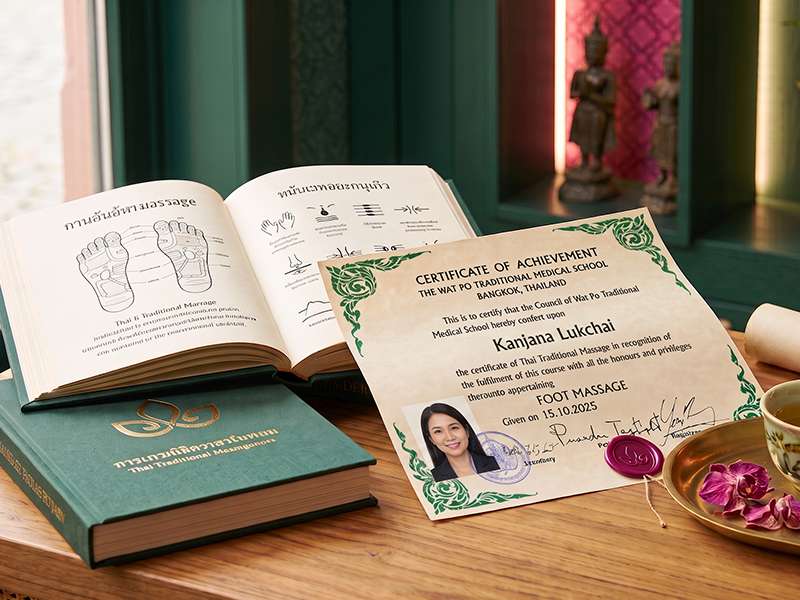
Training, language skills & pricing
Sound massage training is the most important foundation of a successful studio – as a mark of quality and as a basis of trust for clients, authorities and business partners.
Recognised training
- Wat Pho Thai Traditional Medical School (Bangkok): the best-known and most traditional school for Thai massage – its certificate is regarded as the gold standard.
- Schools recognised by the Thai Ministry of Public Health: standardised curricula with documented course hours.
- Thai massage schools in Europe: with documented course hours and practical training.
Ideally, training covers traditional Thai massage (Nuad Thai), aroma oil massage, foot reflexology, basic anatomy, hygiene and safety standards, and contraindications.
Language skills
Good communication is essential in everyday studio life – for explaining procedures, asking about contraindications, customer service and dealing with authorities, landlords and suppliers. At least basic knowledge of the local language is strongly recommended; English is an advantage, especially in tourist areas.
Cost calculation & fair pricing
A realistic calculation is the basis for stable prices. Include all running costs:
- rent, utilities and energy
- wages, social security contributions and insurance
- taxes and duties
- marketing, website and booking software
- materials (oils, balm, laundry, hygiene items)
- reserves for investment, training and downtime
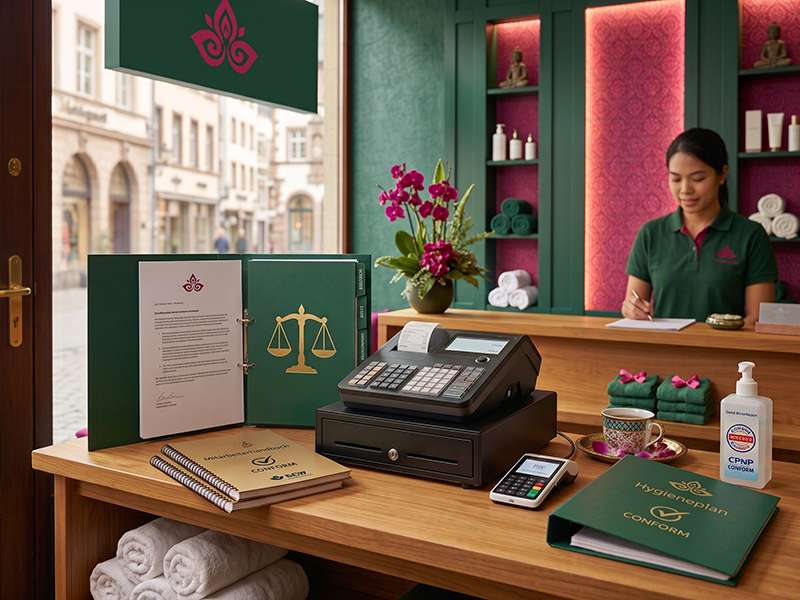
Legal, tax & accounting basics in Europe
A Thai massage studio is a regular business with clear legal obligations. Requirements differ from country to country – so good organisation and an experienced local accountant are indispensable.
If your business is based in an EU country other than Germany and has a valid EU VAT ID, you can buy from our shop at net prices without German VAT (intra-Community supply). Important: your number must be activated for cross-border trade and verifiable in the EU VIES database – in many countries this has to be requested separately from the tax office. Without a valid VAT ID, we charge the VAT of your country. For deliveries to non-EU countries such as Switzerland, Norway or the UK, no VAT is charged by us; import VAT and any customs duties are payable by the recipient.
Wellness, not medical treatment
Traditional Thai massage is offered as a relaxation and wellness service – not as medical treatment. This has clear consequences:
- Business registration: in many European countries, wellness massage without a medical purpose can be registered as a business without a medical or physiotherapy qualification. Requirements vary, however – check with your local trade office or chamber of commerce which licence applies to your services.
- Clear separation from healthcare professions: massages only for relaxation on healthy people – no diagnoses, no promises of cures, no treatment of medical conditions.
- Advertising without health claims: on your website, flyers and social media use terms such as “relaxation massage” or “wellness treatment” instead of “therapy”, “cure” or “pain treatment”.
- Contraindications: briefly ask before every massage whether there is, for example, acute inflammation, recent surgery, thrombosis or a high-risk pregnancy.
Accounting & cash registers
- proper bookkeeping of all income and expenses
- receipts and – where required by national law – certified or fiscalised cash registers
- VAT administration according to national thresholds
- payroll and social security reporting for employees
Further obligations & protection
- registration with the tax authority (tax number, VAT ID)
- a written hygiene plan
- employment law and statutory insurance for staff
- data protection (GDPR-compliant client data)
- business liability insurance covering massage services
- workplace health and safety instruction
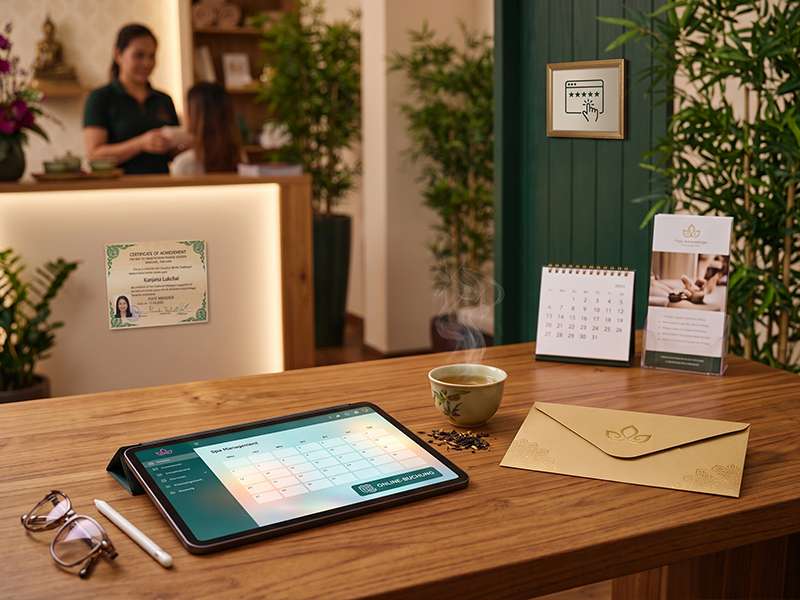
Marketing: getting seen
Great massages alone are not enough – visibility is decisive. Proven measures:
- a professional, mobile-friendly website with quality photos, online booking and gift voucher sales
- a Google Business Profile – actively ask satisfied clients for reviews
- social media (Instagram, Facebook) with insights into your rooms and ambiance
- gift voucher campaigns for Christmas, Mother’s Day or Valentine’s Day
- partnerships with nearby hotels, gyms and companies
Trust is built through quality photos, transparent prices and a clear description of your services.
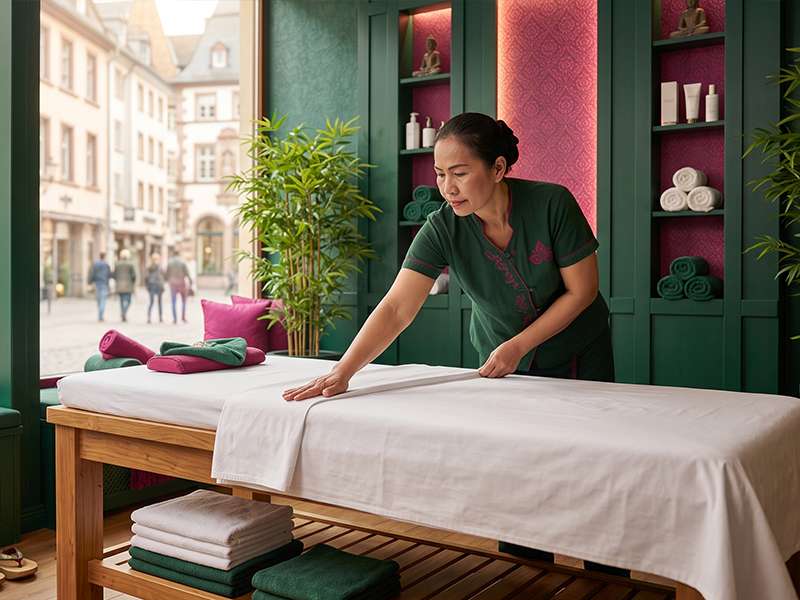
Staff: the heart of your studio
What matters
- professional qualifications
- a friendly, well-groomed appearance
- cleanliness and hygiene
- team spirit and reliability
Legal basics
- written employment contracts
- registration with social security
- fair pay and regulated working hours
Customer service as a competitive edge
- a warm welcome, e.g. with the traditional Thai wai
- respectful treatment and discretion
- punctuality and reliable appointment management
- spotless cleanliness and table hygiene
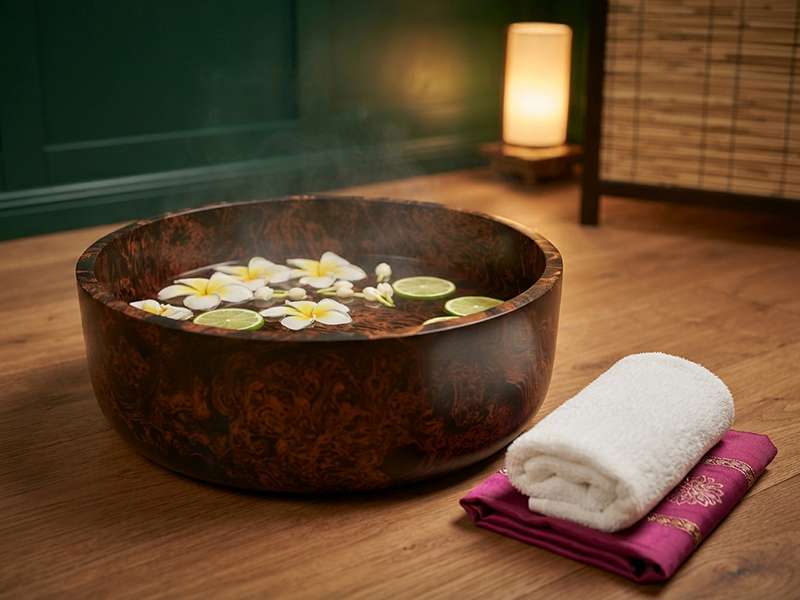
- a small welcome ritual – such as a foot bath – and a cup of tea after the massage
- professional handling of feedback
The goal: your clients feel completely at ease from the first contact until they leave the studio.
Thai ambiance & consumables
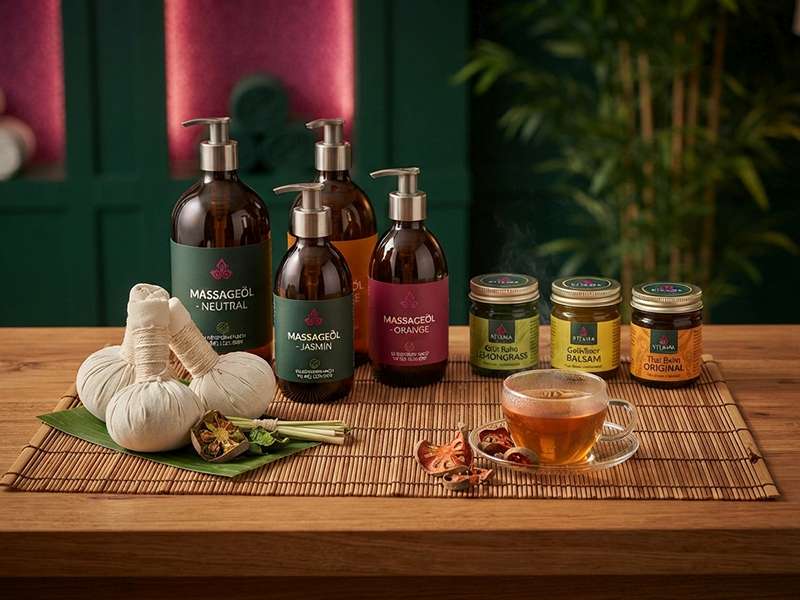
The ambiance conveys the feeling of Thailand and shapes the first impression:
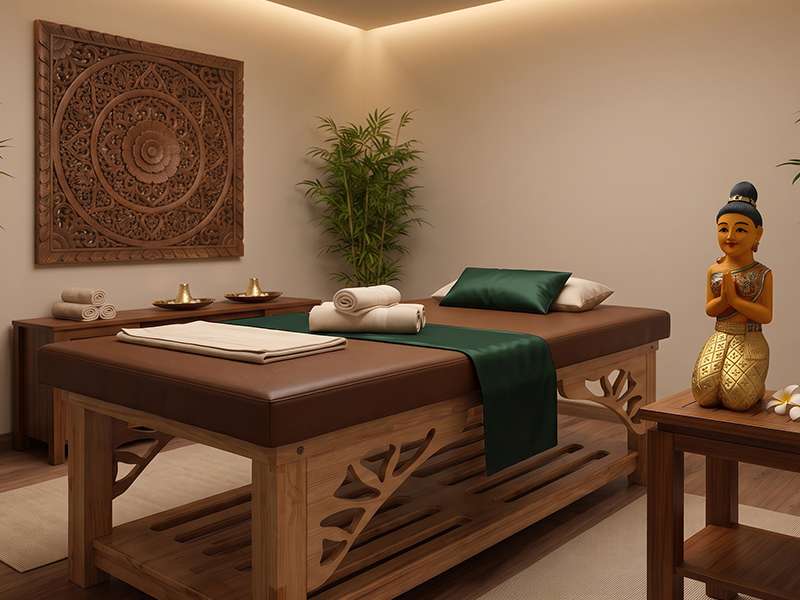
- Wooden massage tables and floor mats
- warm colours, soft lighting and natural materials
- Thai décor and Sawasdee Lady figures
- pleasant, authentic Thai scents
- Thai spa relaxation music (observe the public performance licensing rules in your country)
An authentic ambiance increases relaxation, price acceptance and rebooking rates.
Consumables – ongoing demand, consistent quality
- Massage oils – also in large B2B containers
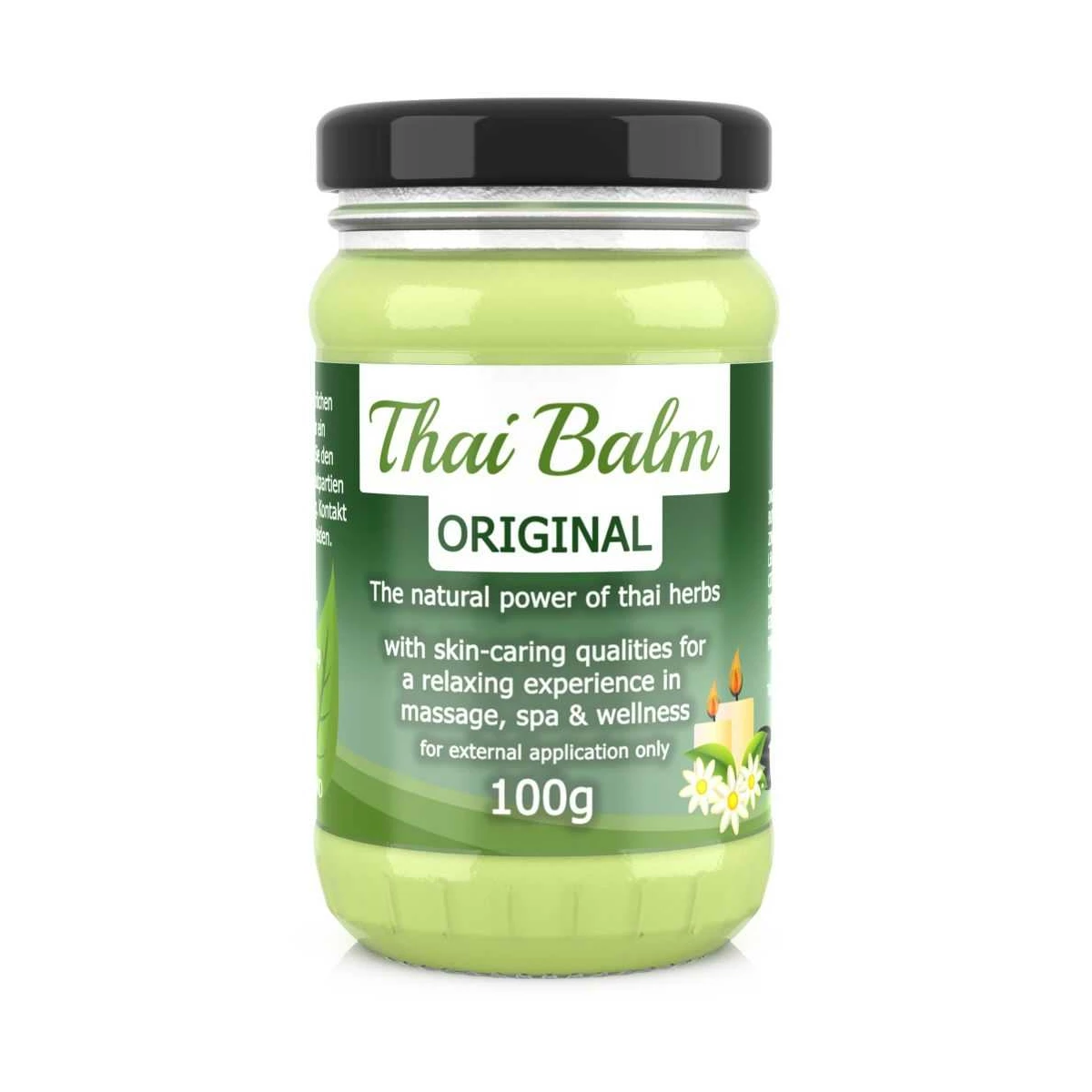
- Thai Balm by Wang Prom
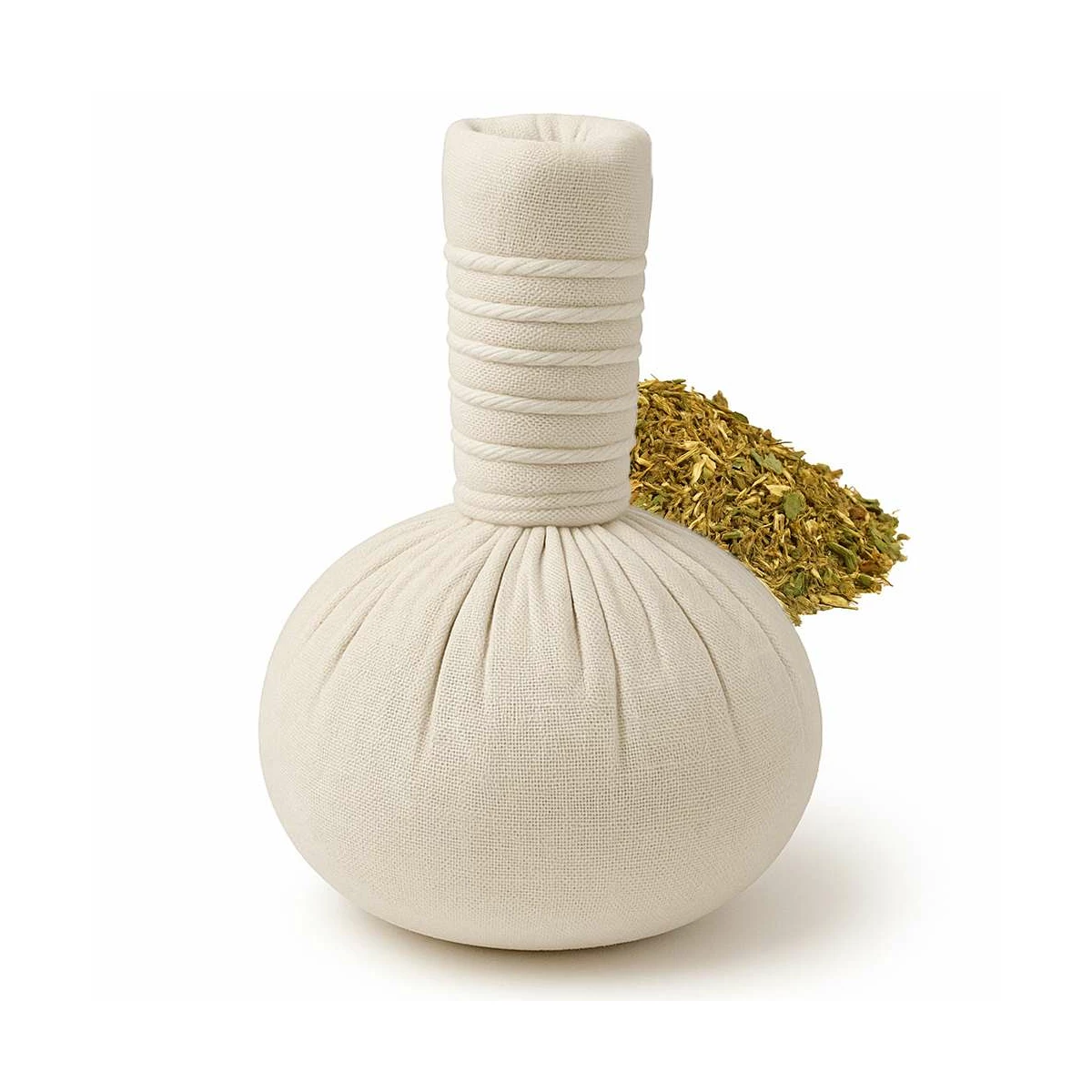
- Herbal compresses from Chiang Mai
- Disposable face cradle covers
- Thai herbal teas to round off the massage
Cosmetic products in the EU must comply with the EU Cosmetics Regulation (EC) No 1223/2009 – including a safety assessment, notification in the EU cosmetics portal (CPNP) and complete labelling naming a responsible person in the EU. Many massage balms and oils imported directly from Thailand contain high doses of active ingredients such as camphor, menthol or methyl salicylate, or advertise healing effects. In the EU they are therefore often classified as medicinal products, for which there is usually no marketing authorisation. When buying – including offers on social media – check for complete European labelling. Non-compliant products can be objected to during official inspections, and you are liable towards your clients.
Air conditioning in the studio
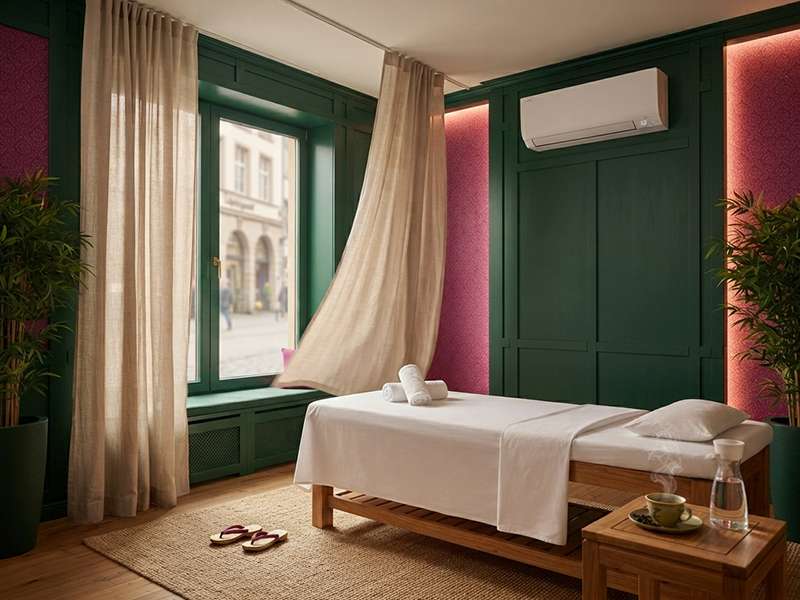
In Thai massage studios, air conditioning is no longer a luxury:
- Comfortable climate: Thai massage is physically demanding for masseuses and masseurs. In stuffy, humid air both sides start to sweat – which disturbs relaxation. A cool, dry room climate ensures real well-being.
- Competitive advantage: many studios shy away from the investment. If you offer pleasantly cool rooms on hot days, word spreads quickly.
- Ready all year round: with increasingly frequent heatwaves, many appointments are lost in summer without cooling. With air conditioning your studio stays attractive all year – and clients and staff are protected from heat stress.
Equipment checklist
- ☐ towels, table covers & laundry
- ☐ hygiene and disinfection products, hygiene plan
- ☐ washing machine & dryer
- ☐ booking and cash register system
- ☐ air conditioning
- ☐ business liability insurance
A reliable partner for equipment & supplies
The success of a studio depends not only on great massages, but also on professional equipment, consistent product quality and smooth processes. Constantly searching for suppliers, comparing prices and uncertainty about quality and delivery times cost time you need for your clients.
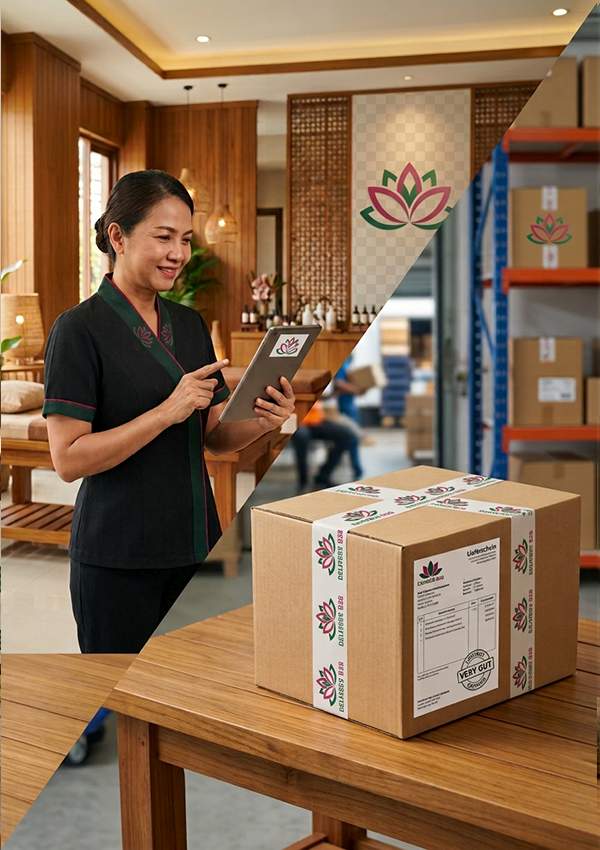
As a specialised B2B supplier for Thai massage studios, we support you from opening day to everyday operation:
- Over 10,000 studios across Europe trust us
- Everything from a single source: from tables and décor to oils, Thai Balm and hygiene items
- Own brands Kitama & Wang Prom: consistent quality with every reorder
- Kitama massage oils made in Germany, Dermatest rating “very good” – also in large B2B containers
- No minimum order, volume prices on many products and individual offers for larger quantities
- Fast dispatch from our warehouse in Germany – orders paid by 12 noon (CET) usually ship the same business day
- Personal service in English and Thai via WhatsApp and email
“We provide the foundation. You create the experience.”
Frequently asked questions
Do I need a specific qualification?
This depends on the country. In many European countries no specific qualification is legally required for wellness massage without a medical purpose – in others, a certificate of competence may be needed. Check with your local trade office. In any case, sound, verifiable training is strongly recommended – for quality, for your insurance and for your clients’ trust.
Can I buy without VAT?
Yes, if your business is based in an EU country other than Germany and you have a valid EU VAT ID verifiable in VIES. For non-EU countries we do not charge VAT; import VAT and customs are paid by the recipient.
How quickly will the equipment be delivered?
Delivery times depend on the destination country and on whether goods are shipped by parcel or as freight (e.g. massage tables). You will find all details in our shipping information.
Are there volume discounts for the initial equipment?
Where volume prices are possible, you will find them directly on the product page. For handmade products this is not always possible, as sourcing is complex. For larger quantities we gladly prepare an individual offer.
May I use balms and oils from Thailand in my studio?
Only if they may legally be sold in the EU. Many original products from Thailand are classified as unauthorised medicinal products in the EU. Our Thai Balm by Wang Prom is a cosmetic product made specifically for studio use.
Conclusion
A successful Thai massage studio in Europe is built on:
- professional training and good communication
- legal and financial order with a clear wellness focus
- compliant, high-quality oils and consumables
- well-planned local marketing
- qualified, fairly paid staff
- outstanding customer service and welcome rituals
- an authentic Thai ambiance and a pleasant room climate
- a reliable B2B partner for equipment and supplies
If you consistently put these factors into practice, you will build not only a stable business, but a valued place of relaxation, quality and trust.
Planning your opening? Write to us – we are happy to help you choose your equipment.
Note: this guide is for general orientation only and does not replace legal or tax advice. Requirements may change and differ between countries and regions. As of: October 2026.